EN
    • Welding robot
      The hollow robot can reach 95% of the speed of Yaskawa robot.Support TIG/MIG/MAG welding process and laser welding processEuropean standard safety dou
    • Handling robot
      Load range from 3KG to 1600KG, protection grade IP67, higher speed, more reliable and richer
    • Scara robot
      Accuracy +-0.01mm, door word (25mm * 300mm * 25mm) beat speed up to 0.48 secondsNo singular points, drag teaching, anti-collision, drag teaching, abso
    • Small 6 axis robot
      Accuracy +-0.02mm, door word (25mm * 300mm * 25mm) beat speed up to 0.48 secondsNo singular points, drag teaching, anti-collision, high-speed emergenc
    • collaborative robot
      SGS CE certification, CR certification and ISO9001 enterprise certificationSupport common processes such as welding, handling, and palletizing.Europea
    • Positioner and linear rail
      Positioners, gun cleaning stations, overhead rails, ground rails and other equipment
    • More equipment
      Positioner and rotary table ; Linear rail , Welding platform, Welding torch , Gripper, Torch cleaning station, Water tank
    The hollow robot can reach 95% of the speed of Yaskawa robot.Support TIG/MIG/MAG welding process and laser welding processEuropean standard safety dou
  1. Industry overviewIndustry overview

    The robot load ranges from 6KG to 3200KG, with high speed and high precision; because of its innovative, efficient and competitive solutions; it is recognized by users around the world and has accumulated a large number of application cases
  1. Application overviewApplication overview

    Through fine classification and higher core computing, the maximum operating speed has broken through to 700 /s; the device speed has stable, fast and efficient performance regardless of long-distance or short-distance, and has IP65 protection level
  1. Service and SupportApplication overview

    LIENGT robot has been focusing on manufacturing, research and development, and sales of industrial robots for ten years, creating value for you with professional
  1. About UsApplication overview

    LIGENT robot is a provider of industrial robots, core components and industrial automation solutions. The companys industrial robots have been successfully appli
When Should a Small Manufacturer Invest in Robotic Welding?
HOME
Blog
09-15 2026

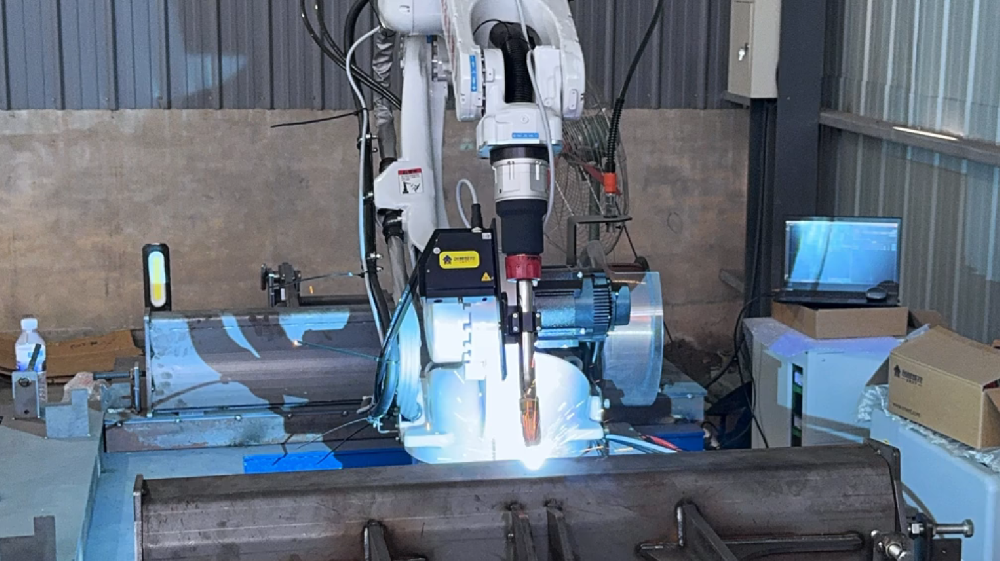
robotic welding system

A Practical Path from Manual Welding to Robotic Production

For a small manufacturing business, moving directly from manual welding to a fully automated production line can seem like a major investment and operational change.

In reality, automation does not have to happen all at once.

A more practical approach for many manufacturers is to identify one repetitive welding process, automate that operation with a suitable robotic system, and gradually expand automation as production requirements grow.

A welding robot for small business can therefore serve not only as a production machine, but also as a starting point for a company's long-term automation strategy.

LIGENT Robot provides industrial robots and automation equipment for welding and other manufacturing applications, with solutions that can be configured around different production processes. Its portfolio includes welding robots, small six-axis robots, collaborative robots, positioners, linear rails, and welding workbenches.

Why Start with One Welding Process?

Many small factories have several manual welding operations, but not all of them are equally suitable for automation.

Some jobs may involve highly customized parts or frequent manual adjustments. Others may involve the same welding path repeated hundreds or thousands of times.

The second type is often a good starting point for robotic welding.

Manufacturers can identify tasks such as:

  • Repetitive frame welding

  • Repeated component joints

  • Standardized brackets

  • Automotive component welding

  • Metal structure welding

  • Repeated production assemblies

Instead of automating the entire workshop, the manufacturer can focus on one process where a robot can provide a clear production benefit.

This approach can make the transition to automation easier to manage.

Turning Repetitive Welding into a Standardized Process

One of the biggest advantages of robotic welding is process repeatability.

Manual welding depends heavily on individual operator technique. Even experienced welders can have differences in torch movement, travel speed, positioning, and production rhythm.

Once a robotic welding process has been properly developed, the robot can repeatedly execute programmed movements and welding parameters.

This can help manufacturers establish a more standardized production process.

For small businesses, standardization can be particularly valuable when customers require consistent products across multiple orders.

Give Skilled Workers a More Productive Role

Introducing a welding robot does not necessarily mean removing skilled workers from the production process.

Instead, the role of employees can shift from performing every repetitive welding operation to managing and improving the automated process.

Operators can focus on:

  • Workpiece preparation

  • Fixture setup

  • Robot operation

  • Weld inspection

  • Program changes

  • Production monitoring

  • Process improvement

This allows experienced workers to contribute their knowledge while the robot handles repetitive movements.

Build Automation Around the Workpiece

A robotic welding system is more than a robot arm.

For many applications, the complete process may include:

Robot + welding equipment + fixture + positioner + safety system

The workpiece fixture determines how accurately the part can be positioned.

A positioner can rotate or reposition the workpiece so that the robot can access different welding areas.

Additional equipment can be added when the application requires it.

LIGENT provides positioners, welding workbenches, gun cleaning stations, and linear rails that can be integrated into different robotic applications.

When Should a Small Business Consider Robotic Welding?

A welding robot may be worth considering when several of the following conditions apply:

Repetitive Welding

The same or similar welding operation is performed repeatedly.

Stable Product Design

The workpiece does not change significantly between production cycles.

Growing Production Demand

The company needs to increase output without relying entirely on additional welding labor.

Quality Requirements

Customers require consistent welding quality across repeated products.

Skilled Labor Pressure

The company has difficulty finding enough experienced welders for repetitive production.

Long-Term Automation Plans

The business expects production to grow and wants to establish an automation foundation.

When these conditions are present, robotic welding can become a practical production investment rather than simply a technology upgrade.

Welding Robots Can Support Different Production Stages

Small manufacturers often grow in stages.

A company may initially use a robot for one welding operation. As production increases, additional equipment can be introduced around the original system.

For example:

Stage 1 — Single Robotic Welding Station

Automate one repetitive welding process.

Stage 2 — Add Workpiece Positioning

Introduce a positioner to improve access and reduce manual repositioning.

Stage 3 — Expand Robot Movement

A linear rail can be considered when the robot needs to serve a larger working area.

Stage 4 — Connect Additional Processes

Other automated operations can gradually be introduced according to production requirements.

This staged approach gives small manufacturers greater flexibility when planning their automation investment.

Applications for Small Manufacturing Businesses

A welding robot for small business can be used across a variety of manufacturing applications.

Metal Fabrication

Fabricators producing repeated frames, brackets, supports, and structural components can automate suitable welding operations.

Automotive Components

Small and medium-sized automotive suppliers can use robotic welding for repeated component production.

Construction Machinery

Welded structures and machinery components can benefit from repeatable robotic welding processes.

Furniture and Equipment

Metal furniture, equipment frames, stands, and similar products may contain repetitive welding operations suitable for robotic automation.

LIGENT's application cases include welding projects involving products such as steel chair frames, animal gates, bathtubs, and large engineering equipment, demonstrating applications across different product types and company sizes.

Different Welding Processes for Different Products

The welding process should be matched to the material, joint design, production requirements, and desired weld quality.

LIGENT's welding solutions support common industrial processes including TIG, MIG/MAG, ARC, and laser welding applications.

This gives manufacturers the flexibility to develop a robotic welding system around their actual production process instead of changing the product simply to accommodate the robot.

Why Flexibility Matters for Small Manufacturers

Large manufacturers often have dedicated production lines for specific products.

Small businesses may operate differently.

They may produce several products for different customers, accept customized orders, or adjust production according to market demand.

For this reason, a flexible robotic system can be more valuable than a highly specialized automation line.

A programmable welding robot can support different suitable welding tasks, allowing manufacturers to use the equipment across more than one product when the application permits.

LIGENT Robot: Helping Small Manufacturers Move Toward Automation

LIGENT Robot is an industrial robot and automation solution provider offering welding robots, handling robots, small six-axis robots, collaborative robots, positioners, linear rails, and other automation equipment.

Its welding robot portfolio includes multiple six-axis models, while supporting equipment can be combined according to the requirements of individual applications. LIGENT also has welding application experience across different industries and company sizes.

For small manufacturers, this makes it possible to approach automation as a gradual production improvement rather than a single large factory transformation.

Making the First Step Toward Robotic Welding

The best welding robot for small manufacturing business is not necessarily the most powerful or most expensive system.

It is the system that solves a real production problem and can provide value as the business develops.

Starting with one repetitive welding process can allow a small manufacturer to gain experience with robotic production, establish standardized welding procedures, and evaluate the results before expanding automation further.

As production requirements grow, the same automation strategy can be extended with additional positioning, movement, or production equipment.

For manufacturers considering a welding robot for small business, LIGENT Robot provides flexible industrial robotic solutions designed around different welding applications and production requirements.

Contact LIGENT Robot to discuss your welding process and discover a practical path toward robotic welding automation.


It takes 20 minutes to complete the installation after unpacking and put into use in 1 hour

It takes 20 minutes to complete the installation after unpacking and put into use in 1 hour

LIGENT series robots, simple design, simple wiring; flexible deployment, time-saving and efficient

learn more